
The Wild Lily Institute

The Intercessions
We now ride into Mary’s fragile heart,
with eyes of worship, we adore the cusp:
clash of holiness with rash mercy mild,
we will ride, racing the Nile, holy nard.
W.E. Isaacson, The Intercessions
About the Book
In The Intercessions, Emily Isaacson gathers prayers from the ashes of Notre Dame and binds them into sonnets that stand as vigil candles against the dark. This sacred cycle weaves ruin with hope, memory with mercy, and grief with the quiet resolve to rebuild what fire could not consume. Rooted in history yet alive with devotion, these poems speak as priest and pilgrim, guiding the reader through lament into a gentle resurrection of faith.
Here is a book for all who stand among ruins — personal or collective — and dare to believe that prayer is stronger than flame.
From riverbanks and relics to the final whispered hymn, The Intercessions calls us to kneel in the ashes and rise singing, a chorus of watchmen keeping vigil for the dawn.
Potter's Press: 65 pages

Now Available. . . also on Amazon
Reviews
The Madonna figures in this book feel worn down, present, and close to ordinary suffering. She’s not distant or idealized. Poems like The Madonna of the Streets place her right in the middle of broken spaces, which made those sections feel very human. The settings move from churches to streets to rivers, and that shift keeps things from feeling static.
—Christine, Reviewer
Sound plays a bigger role in this book than I expected. Bells, choirs, organs, and even the absence of music come up repeatedly. The poem about the organ surviving stood out because it focuses on something fragile that almost didn’t make it. It’s not framed as a miracle, just a close call. That restraint made it more effective.
—Barbie Sparkle, Reviewer
This collection feels deeply tied to land and geography, and that gave it weight for me. When the poems move beyond Notre Dame into places like Provence or river valleys, it doesn’t feel like a detour. I never got the sense the writer was trying to impress anyone. It reads like someone writing through something heavy and unresolved.
—Jessica, Reviewer
Some poems hit harder if you sit with them instead of moving on. Morning in the Burned Cathedral was especially affecting. That quiet moment after disaster, when everything is still standing but nothing feels the same, was painfully familiar. There’s no attempt to wrap things up neatly, even later in the book. The grief doesn’t disappear and that kind of honesty mattered to me. It treats faith as something that can hold sorrow without immediately turning it into reassurance.
—Lala Bo, Reviewer
Kneeling, standing, clasping hands, watching from the ground. It keeps the voice from becoming abstract. In some places, the boundary between the speaker, Christ, and the cathedral blurs . . . but I found it fitting. Trauma does that. These poems don’t position the speaker as special or enlightened. They feel small in the face of what’s happening, which made them more believable.
—Sunrise, Reviewer
Hope here feels practical, not emotional. There’s also a steady contrast between fire and water throughout the book. Rivers, oil, baptism, rain. It’s subtle, but it keeps resurfacing. Reading it felt like standing between destruction and renewal without knowing which one would win. That uncertainty felt honest and earned.
—Nana Cathy, Reviewer
This is not a book for readers who want closure. The structure keeps returning to prayer and asking rather than resolving anything. Memory and hope sit side by side, sometimes uncomfortably. What kept it from feeling abstract was how specific the imagery stays. Stone, ash, lead, wood. Real materials. By the end, what stayed with me wasn’t triumph or healing, but endurance. The act of continuing to pray, continue to witness, even when the outcome isn’t clear. That quiet persistence felt like the heart of the book. . . highly recommended.
—Max Prime, Reviewer
You feel that right away in the poems set inside the burned space, where ash, silence, and light keep showing up. I liked how the speaker isn’t trying to explain the fire or make sense of it. They’re just there, standing, watching, praying. The writing stays close to stone, smoke, and sound instead of drifting into vague spirituality. I finished this feeling quieter than when I started, like I’d been sitting with someone else’s grief.
—Harmonia, Reviewer
Rivers, fields, architecture, even specific parts of the cathedral come up again and again, and it keeps the poems from floating off into abstraction. . . The sections that move between the Seine and the interior of Notre Dame felt especially strong. There’s a sense of movement without a clear storyline, which I liked. It reads more like walking and stopping, then walking again
—Bulletproof Girl, Reviewer
Reading this felt less like finishing a book and more like keeping watch for a while. . . Like returning to the same place because you’re not done yet. . . Singing while the fire is happening feels pointless on the surface, but the poem makes it feel necessary. A lot of these pieces sit in discomfort without trying to tidy it up.
—Jiminie Mochi, Reviewer
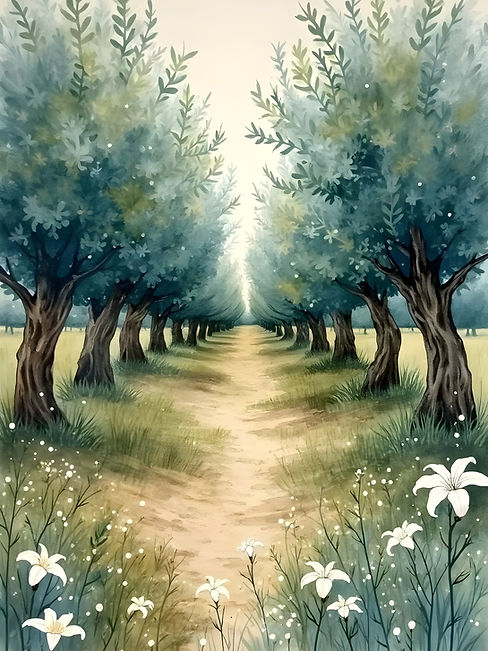
Intercession Thirteen.
O thorn, O pitied thorn of his dying—
budding and blooming in winter, wreath bled.
O holy cross, O instrument of death—
an olive tree with oil coursing, falling
down. O mortification of the flesh,
that I may be bound to you; and my sin,
bound to the sacred smooth skull and head pierced
by field circle of thorns, that crown of death.
Once a babe, you are lifted up on high
and we will in worship, now lift you high.
You were crucified for the help of me;
your blood is rivers of myrrh, drops of thyme,
bore our iniquity in this dark time.
Our fingers intertwine with your gold leaves.
W.E. Isaacson